Some campgrounds are places you sleep. The North Fruita Desert campground is a place you live for a few days, parked at the base of the Book Cliffs with singletrack leaving from your tent flap and dark sky overhead. It is the beating heart of Fruita's bike culture and one of the best value camps in Colorado. This guide covers the developed campground, the dispersed desert around it, and every practical detail that separates a smooth stay from a dusty improvisation.
Where it is and why it matters
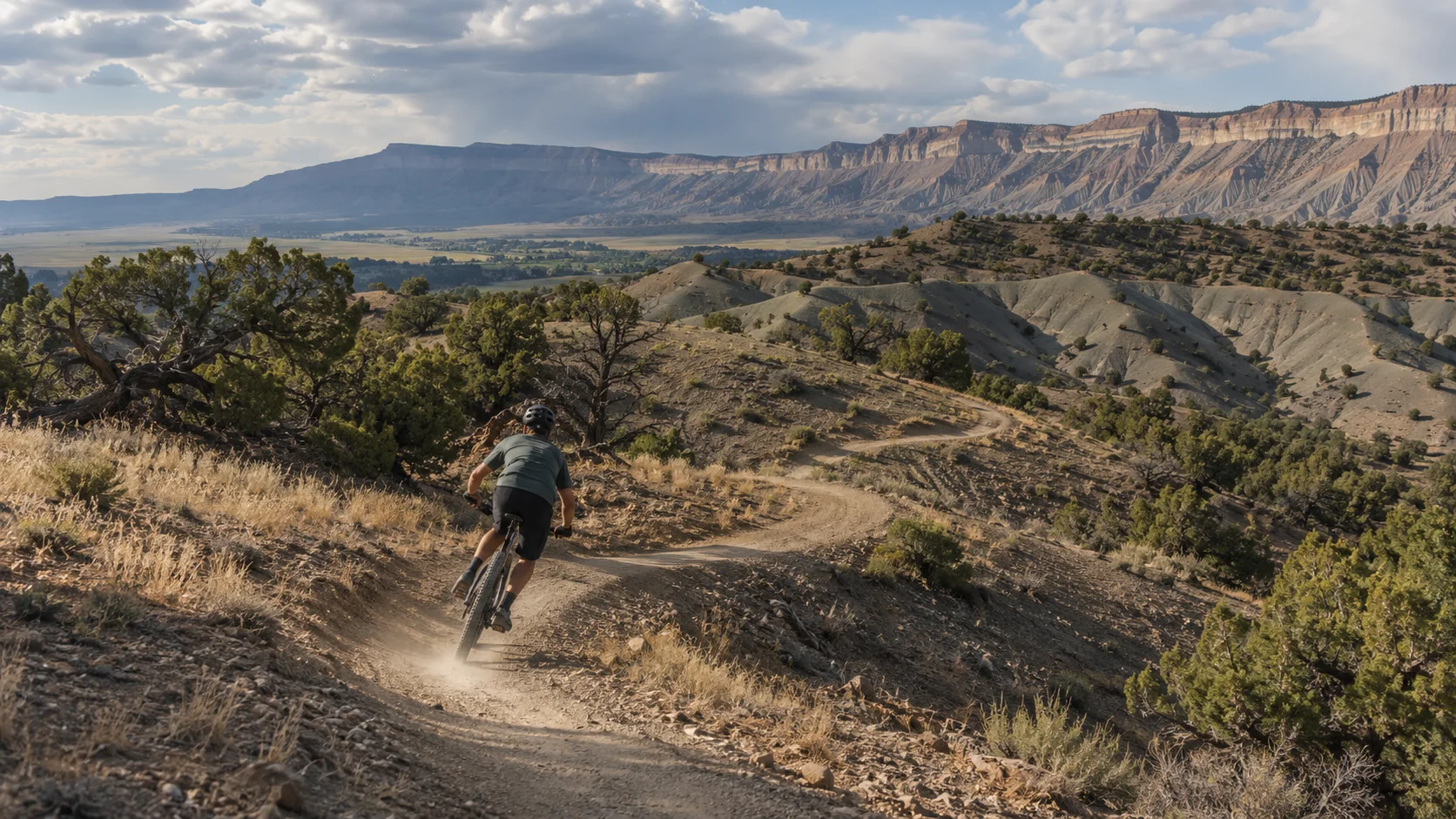
The campground sits at the top of 18 Road, about twenty five minutes north of downtown Fruita, exactly where the valley's farm grid gives way to rolling desert and the clay singletrack of the North Fruita Desert trail system. Trails literally begin at the campground's edge: you can roll from your site onto Prime Cut without touching a car.
That geography is the whole pitch. Dawn patrol laps before coffee cools, dusk laps while dinner cooks, kids doing one more run of Kessel while adults watch the cliffs turn red. Riders who camp here measure the trip in laps per day instead of drives per day, and nobody goes back to commuting from town happily.
It is also simply a beautiful place to exist. The Book Cliffs wall off the northern horizon, the valley spreads south, junipers scatter shade, and the night sky performs the way it only does twenty miles from the nearest streetlight.
The developed campground: what you get
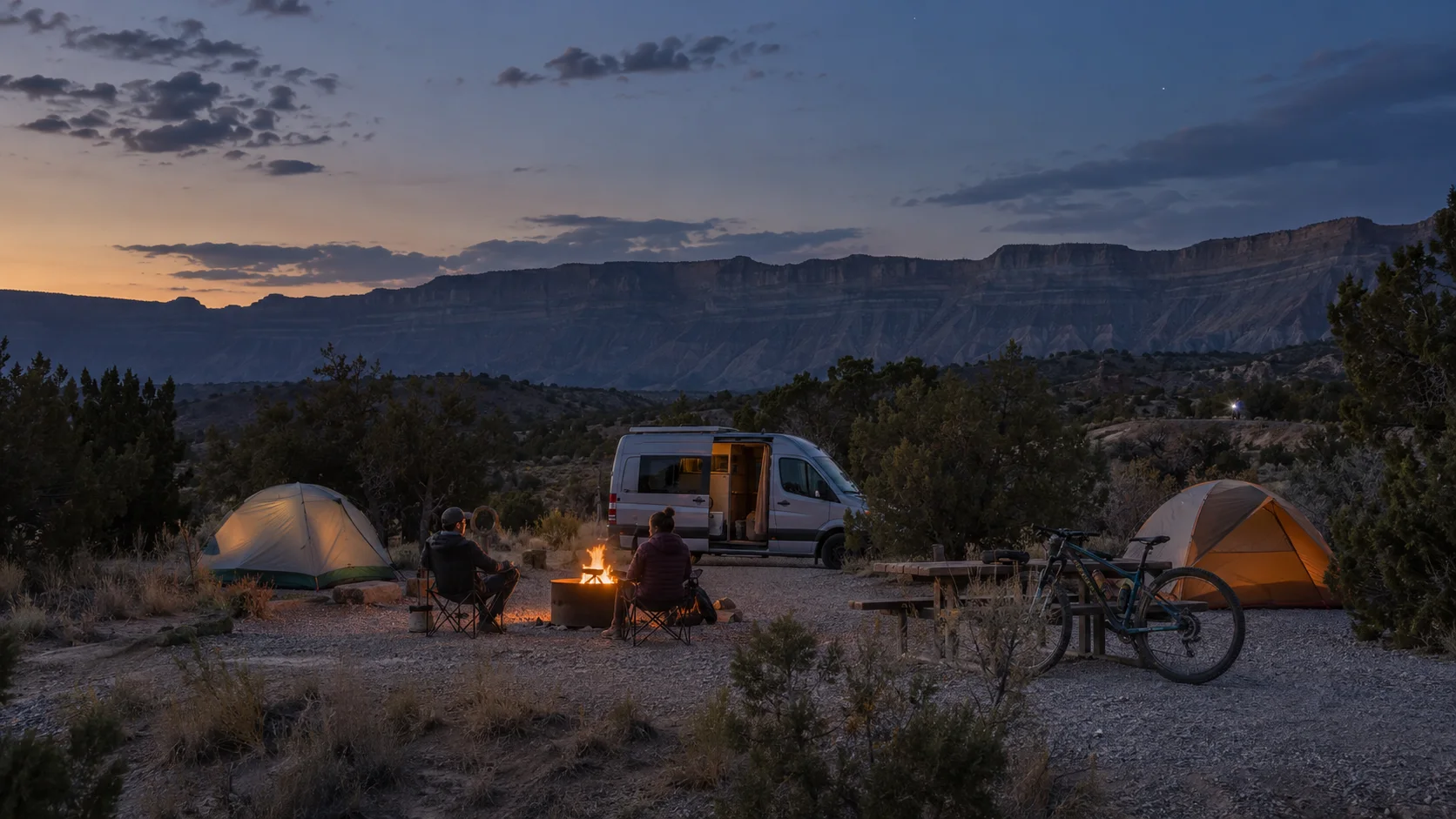
This is a Bureau of Land Management campground, which sets expectations correctly: well built and intentionally simple. Sites are gravel pads with picnic tables, fire rings, and shade shelters on many, laid out in loops that accommodate tents, trucks, and small to midsize trailers and vans comfortably. Vault toilets are maintained and plentiful.
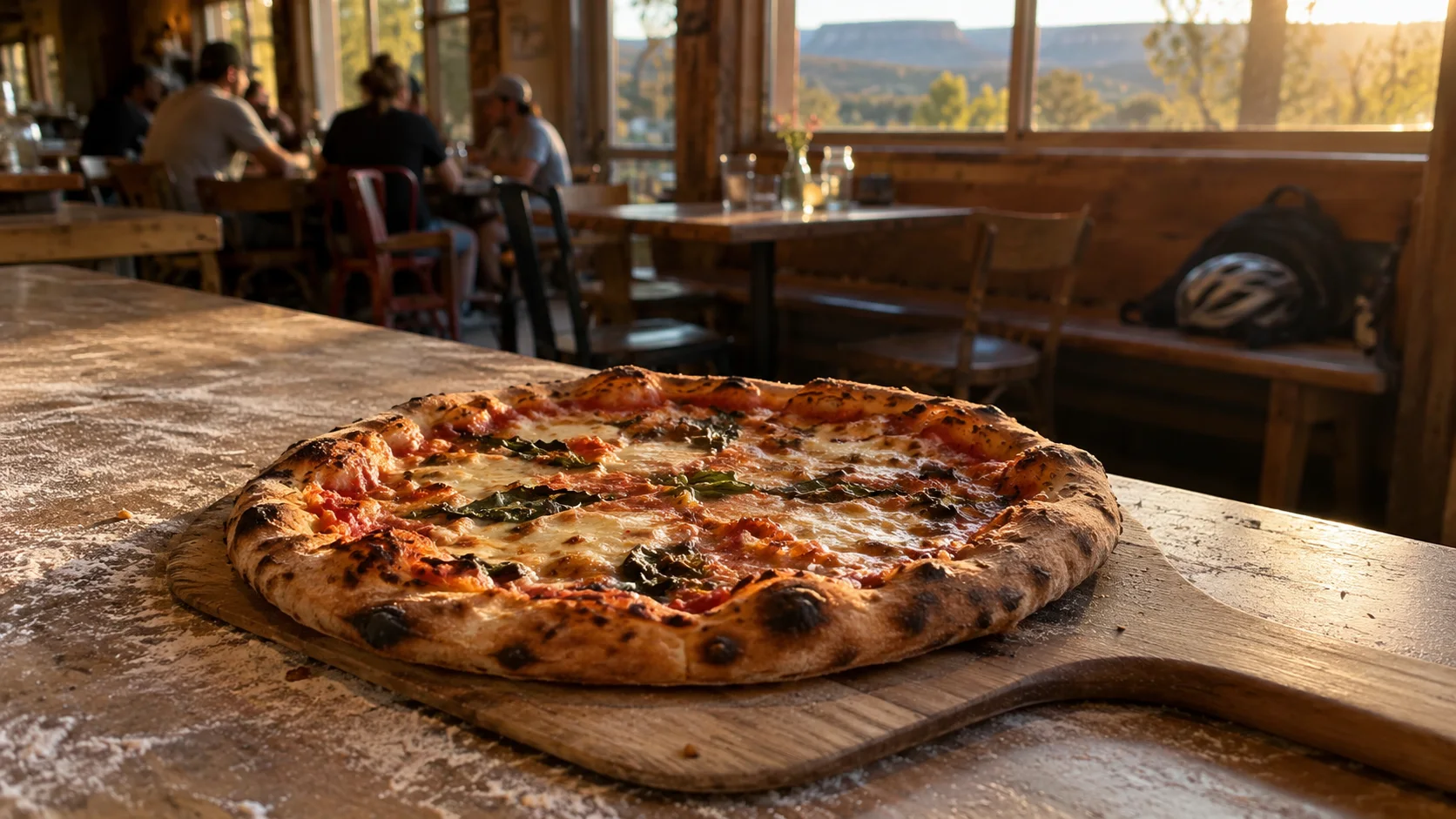
What you will not find matters just as much: no water, no hookups, no showers, no trash service in some seasons, and no camp store. Everything you consume rides in with you, and everything you generate rides out. The nearest full services are back in Fruita, which is why the local rhythm is a town run every day or two for water, ice, and a restaurant dinner.
Fees are modest by any standard, payable on site or through the federal reservation system depending on current management. Check the BLM's North Fruita Desert page and recreation.gov for the current fee and booking status before you commit to a plan.
Reservations, first come sites, and timing
Demand concentrates brutally: spring and fall weekends fill, holiday weekends overflow, and festival weeks in town push campers up the road. Midweek in peak season is comfortable, and summer and winter rarely stress capacity at all. If your dates are weekend dates in April, May, September, or October, treat securing a site as seriously as booking a flight.
The practical playbook: reserve whatever is reservable as early as the booking window opens, and if you are chancing first come sites, arrive Thursday morning rather than Friday afternoon. Checkout churn peaks late morning, so patient loops of the campground around ten often get rewarded. Always have the dispersed desert as a fallback so a full campground costs you nothing but a shrug.
Dispersed camping: the free desert
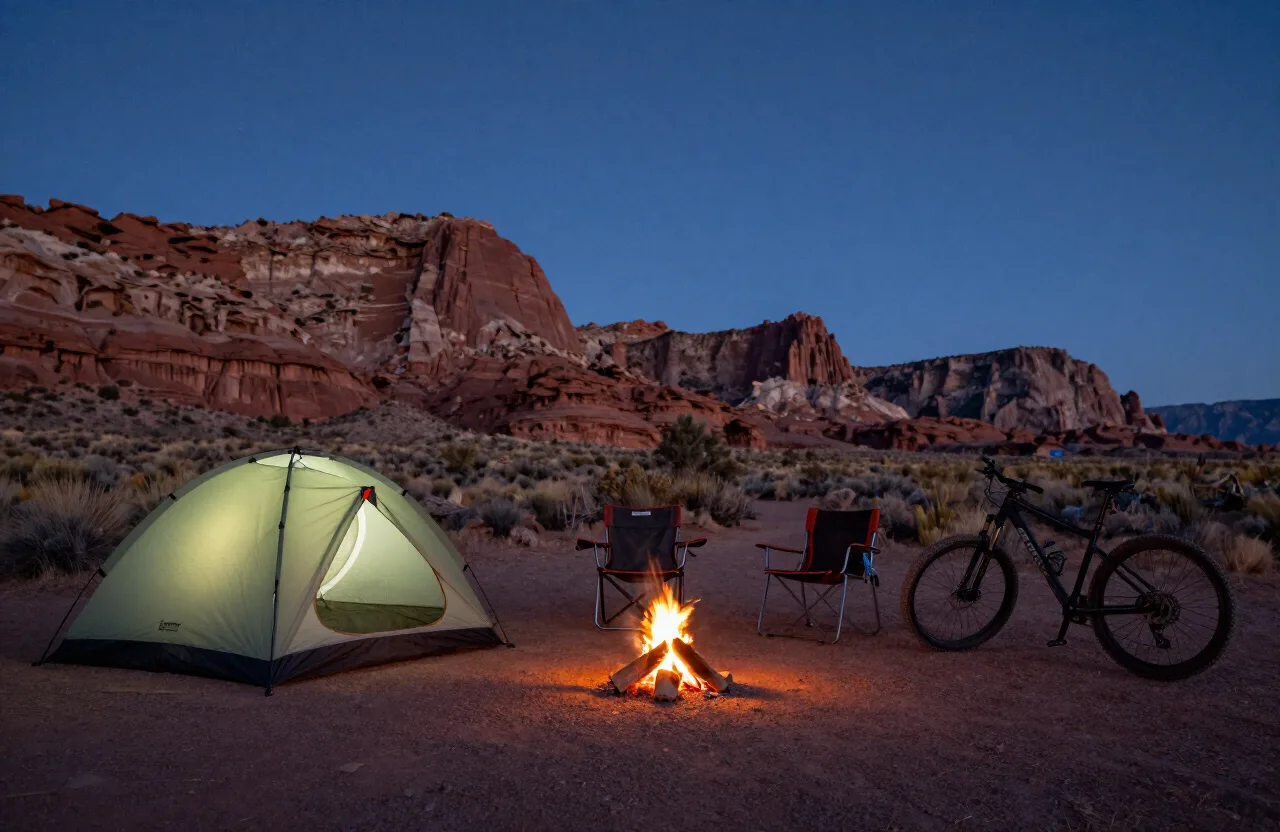
Beyond the developed loops, the surrounding BLM desert allows dispersed camping in established areas, and plenty of regulars prefer it: zero dollars, more solitude, and sunrise views the campground cannot improve on. Designated dispersed zones along the access roads are marked, and the rule is to use existing disturbed sites rather than pioneering new ones.
Dispersed means truly self sufficient: no toilets, no tables, no fire rings in many spots, and fire restrictions that tighten through dry months. Pack a toilet solution, because the desert's apparent emptiness is an illusion on a busy weekend and the land shows every shortcut. The main camping guide covers the etiquette and the alternative areas around the valley.
One honest caution: the access roads wash and rut, and clay after rain stops two wheel drive vehicles completely. If weather is moving in, camp closer to the pavement or accept that you might be staying an extra night. Locals call it getting clayed in, and it is funnier when it happens to someone else.
What to pack for this specific desert
Water is the headline: a gallon per person per day for camp plus riding bottles, and more in summer. Shade is the second: the shelters help but an awning or canopy transforms midday. Then the usual high desert kit of layers for forty degree temperature swings, real sun protection, a headlamp, and a repair mindset for both bikes and camp gear, because the nearest everything is twenty five minutes away.
Firewood comes from town, since gathering is prohibited and the desert has nothing to give anyway. Bring doubles of small critical items: tent stakes for wind, a spare lighter, extra tubes. Cell coverage ranges from one bar to none, so download maps and tell someone your plan. None of this is hardship, it is just the desert asking you to arrive as an adult.
A day in the life at 18 Road
The campground wakes early and happily. Coffee at first light, a lap on cold tacky dirt, breakfast when the sun clears the cliffs. Midday belongs to shade, naps, snacks, and bike maintenance, because desert afternoons are for resting through. The second riding shift starts around four and runs to dusk, and the evening ends in a constellation of campfires with ride stories bouncing between sites.
Weekends add a social layer that is half the point: group rides forming at the signboard, kids forming feral packs on the campground loops, someone's speaker playing low, a potluck emerging from nothing. If you camp here twice you will start recognizing rigs. It is that kind of place.
Fires, stars, and the quiet rules
Fire rings in the developed campground make evening fires routine when restrictions allow, and restrictions are the operative word: the Grand Valley spends chunks of most summers under stage one or stage two limits, posted at the entrance and on the BLM page. Respect them absolutely, because this desert carries fire like gossip.
The reward for darkness honored properly is the sky. The campground sits far enough from valley lights that the Milky Way shows plainly on moonless nights, and late evenings in the shoulder seasons bring satellite spotting, meteor luck, and the kind of silence that makes city visitors laugh out loud. Keep lanterns low and neighbors will love you.
Quiet hours follow the usual campground convention and the culture enforces them gently, since everyone present intends to ride at dawn. The soundtrack after ten is wind, coyotes, and the occasional freehub, exactly as it should be.
Families, dogs, and bigger rigs
Families thrive here, with the campground loops serving as training wheels territory and Kessel Run close enough for a kid's victory lap before dinner. The exposure to manage is the ordinary desert list: sun, dehydration, and cactus, all solvable with supervision and snacks.
Dogs do fine under the usual leash rules and summer heat judgment. Big rigs need more thought: the road in is washboard dirt, sites fit most vans and trailers but true large motorhomes will find the loops tight, and there are no hookups or dump stations. Many RV travelers split the difference, staying at a full service park in the valley and day tripping to the trails, an option the camping guide compares honestly.
When to come
April, May, late September, and October are the glory windows: warm days, cold nights, perfect dirt. Summer works for early risers who respect the heat, and it brings the quietest weekends of the riding year. Winter is the sleeper, with mild dry spells delivering empty trails and crisp camping for anyone with a real sleeping bag, as our weather guide details month by month.
Whenever you come, build in one buffer day if you can. The desert's best moments, the still mornings and the violet dusks, do not schedule themselves, and the difference between a good trip and a great one here is usually one unhurried extra day.
The one week version
If you have a full week, the campground supports it beautifully with a simple structure. Ride the 18 Road classics the first two days while legs are fresh, take a town day for showers, laundry, the museum, and a restaurant run, then spend days four and five on the Kokopelli Loops and the Monument before closing with repeat laps of whatever won your heart.
That rhythm, two days on dirt and one in town, matches how supplies, bodies, and attention spans actually run out here. By the end you will know which campsite you want next time, which trail you dream about, and why a plain gravel loop under the Book Cliffs books out months ahead every spring.
Frequently asked questions
Does the North Fruita Desert campground have water?
No. There is no potable water at the campground or trailheads, so haul in roughly a gallon per person per day plus riding water, and resupply in Fruita.
Can you reserve sites at 18 Road?
Management has used both reservation and first come systems, so check the BLM North Fruita Desert page and recreation.gov for current status before your trip, and arrive early on peak weekends regardless.
Is there free camping near the campground?
Yes, designated dispersed camping on the surrounding BLM land is free. It has zero facilities, so come fully self sufficient and use existing sites.
Can RVs camp at the North Fruita Desert campground?
Vans, trucks, and small to midsize trailers fit comfortably. Large motorhomes find the dirt road and loops tight, and there are no hookups, so many big rigs base in the valley instead.
Published November 14, 2026 · How we research